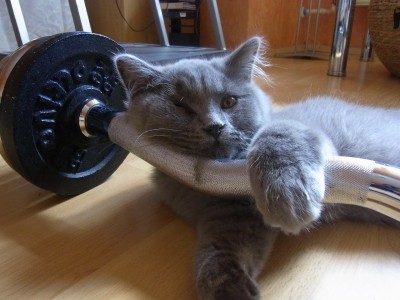
In commercials about sports, physical training or martial arts programs, recurring arguments to motivate participants are often health, mood effects after physically letting steam off, pride on physical performance (“Bench press Xkg in Y days”), pride on good looks (“Get ripped”, “Six pack” and other body-based wording), camaraderie, and fun. In case it’s not enough for you to get into it, here are some other reasons to train.
- Feeling of safety in case I make it to the old age: When the past comes in mind, I try to change burdens into springboards (see this recent post). When the future comes in mind, I see it like a cart I have to push, not really seeing what is behind, but with a minimum of control on the steering and my pushing effort. Most of the future circumstances are mystery, (fortunately!), and the things I can try to keep consistent over time are attitude and skills (even though those later will slowly fade away). Everytime I train my awareness, agility or balance, or flexibility, I am lessening the cart from a future load of fear (fear to slip on the floor, fear of the accident, etc.). It does not make me invulnerable, but it can have the same effect as a placebo vaccine: confidence grows, and strength of the immune system follows.
- Responsibility towards youth’s health: Even if I grew up eating home-cooked foods (thanks mom & grandma), these last years also saw unprecedented improvements in the food sector. Especially, taste engineering and resources industrialisation are progressing more and more rapidly, for the better and for the worse. Not diving into the debate of how good or how bad these changes are for the world, I simply observe the growing number of kids suffering from pathological obesity, or just with damaging overweight issues. To maintain balance (again: it is not about good vs evil), among other reasons, I have chosen to learn all I can about health, food, and other human body related topics. I plan to do it all my life (as an amateur for the moment), and physical training is part of the job. Somehow, this is a choice of position in society’s equilibrium.
- Understanding the (un-)importance of looks: As mentioned before in another post, you meet all kind of surprising individuals in the training world, especially those for which their looks don’t match what you expect from them. For sure there is a statistical average correlation between looks and physical performance. However, once you start training, you discover the whole range of physical feats that are invisible on pictures. Especially, when you try the “invisible skills” yourself, each discovery gives you the pleasurable “Ahah !” effect. Not only does it free you from the burden of body looks, but also it teaches you to observe beyond your primary intuitions.
- Appreciation out of balance: When you know illness, you learn to appreciate health. When you know hunger, you learn to appreciate food. When you train, you feel fatigue, sore muscles, physical constraint, internal pain (when stretching for example) or external pain (when you get hit), adversity and ignorance. On top of getting fitter and developing skills, the natural balance of deprivation/consumption teaches you to appreciate what you have when not training, however insignificant it might seem beforehand. Water feels the best after a training session in hot weather, your bed feels like heaven after a long toiling day… on and on, simple life after training makes you happier than sophisticated life before training.
- Attitude towards effort: Imagine that you train for weeks, months, years, with very low results improvements on your physical performance or fighting skills. If you had the right mindset while training, you will figure out that even though physical efficiency of your training may be reviewed, you probably developed a parallel invisible skill: Attitude towards effort. This is the ability to look at an incredible amount of effort, no matter how hopeless final achievement might seem, no matter how frustrated you can expect to feel, this ability gives you the power to jump into the fire and give all your heart on a regular basis for a long term.
- Readiness to take care of the unable: I may be insisting on this reason due to my personal experience of living with aged – former unhealthy – people (parents who are about sixty, and grandmother of about 90). As the young man of the house, some chores requiring strength or balance are obviously mine to accomplish. With parents unevitably aging, the range of tasks I will have to accomplish for them will unevitably widen. Beyond parents only, there will probably be lots of people on my path that could need my help, whether explicitly or implicitly. How often have you thought “Somebody has to do the job, and I am the only one who can do it, whether I like it or not” ? How often do you expect these situations to happen again ? If the answer to these questions is “Frequently”, you need to find the stamina, the strength and patience to care. The only possibilities for you are training, strategizing (on task efficiency) or hiring. Just in case your mind fails on strategizing, or your wallet fails on hiring, think of training !
- Often a cheap, accessible, shareable and unlimited leisure: I realized recently that these latter months, my leisure moved from a consuming mindset (books, movies, shows, games, music and restaurants) to a giving mindset (writing articles, training, playing guitar, cooking or producing gifts). Maybe this trend was due to some financial restrictions I imposed to myself, but I figure out that the ratio “Number of (potential) leisure hours”/”Total cost” dramatically increased. Not only do I save way more money than before, but my life also slowed down to a sounder level, far away from binge consumption (whether on physical goods/services or mental goods/services).
I wish you to enjoy training and its side effects as much as I do now. Have a smiling day !




Comments by Alex